Steven Murphy / Earthism / Earth Tax
BBC Bias – An Easy Fix
The BBC still occupies a central place in British public life, but the environment around it has changed beyond recognition. What was once a dominant national broadcaster now competes with social platforms, global streaming services, and thousands of independent voices. In this landscape, trust is harder to earn, and claims of bias—whether accurate or not—carry more weight than ever.
The BBC’s history matters, but it no longer defines how people experience it. Today, audiences judge the organisation in real time, comparing its coverage with alternative sources that offer different interpretations of the same events. When people perceive a political or cultural lean, that perception shapes their trust, it becomes their reality, regardless of the BBC’s presented commitment to impartiality.
This is why the debate about the licence fee has intensified, a publicly funded broadcaster must be seen as representing the whole public. When a significant portion of the population believes the BBC leans in a particular direction, and isn’t representative of the public’s opinion the funding model becomes harder to defend—not because bias is unique to the BBC, but because undisclosed bias undermines trust and confidence.
But there is a deeper issue. The entire modern media environment is dominated by privately owned platforms, each with its own editorial slant shaped by ownership, commercial incentives, and institutional culture. Bias is not an anomaly — it is a structural feature of media. It appears in story selection, programme content & context, guest choices and tone. It’s unavoidable and exists everywhere, not just at the BBC.
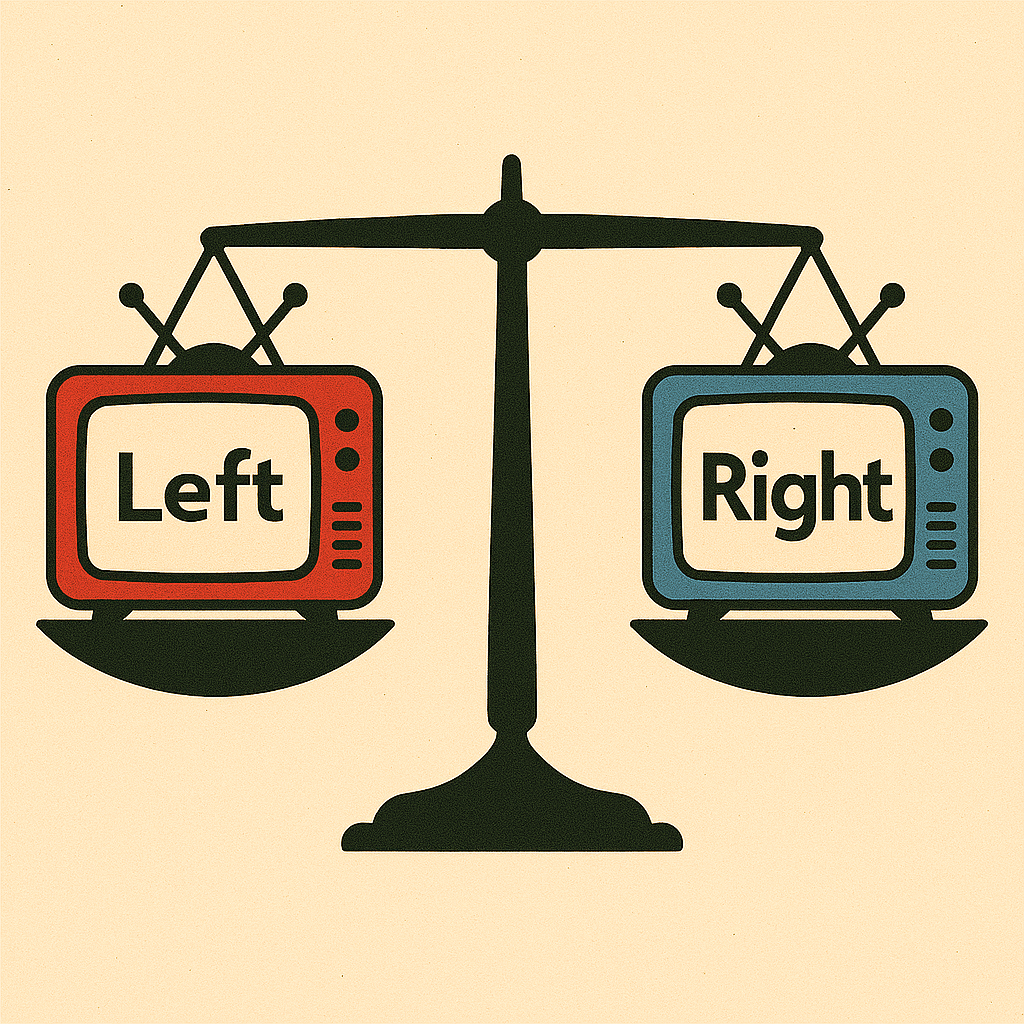
So if bias cannot be eliminated, the question becomes how to balance it. One approach is to keep the BBC publicly owned, but reduce its size, and pair it with a second publicly funded broadcaster that openly represents an opposing editorial stance. To ensure fairness, the licence fee and the current BBC’s broadcasting estate – television channels, radio stations, regional offices, and digital infrastructure would be split equally between the two entities.
Both organisations could operate under transparent charters that clearly state their perspectives. To ensure there is no divergence the transfer of BBC management or leadership personnel would be prohibited, those who influenced programming, narrative and culture would not be able to move to the new corporation, it would start with a completely new slate.
Ex BBC employee’s would also be prohibited from being directly employed, or from consulting on any elements of the new organisation. This would ensure the new institution developed its own identity, and its own culture without the baggage of the past.
Independent oversight would ensure standards and prevent either outlet drifting beyond its declared remit. This approach means the public pays no more than they do now. Funding could be capped at current levels and only rise with inflation, if either broadcaster wanted additional revenue, both would be free to top up their income through advertising or commercial partnerships.
This model would not pretend to create neutrality. Instead, it would create clarity. Audiences would know the lens through which each broadcaster views the world. They could compare narratives, understand the differences, and make informed judgments. In a media environment where private outlets create their own narrative and already operate with clear ideological identities, this would give the public something rare: clarity and transparency backed by public accountability.
The goal is not to recreate the monopoly of the past. It is to prevent any single viewpoint—explicit or implicit—from dominating by default. The real issue isn’t whether the BBC leans left or right. It’s that any institutional bias, if it exists, should be openly acknowledged rather than denied. Transparency builds trust. A dual‑broadcaster model with openly declared perspectives would give the public a clearer sense of where each narrative comes from, and restore balance in a way that denial never can.
This model is simple to implement, cost‑neutral, and structurally resistant to manipulation. Most importantly, it deliberately introduces two opposing editorial stances, giving the public a genuine choice. Instead of one dominant voice claiming neutrality, people would be free to choose the worldview that aligns with their values—or compare both to form their own conclusions.
In a media landscape saturated with subtle, undeclared bias, this approach offers something unique: clarity, honesty, and balance by design. Bias becomes visible rather than hidden. Accountability becomes structural rather than optional. And the public—not private owners—regain control over the narratives that shape national life.
This is why the BBC should remain public. Not to preserve the past, but to build a future where transparency replaces denial, balance replaces dominance, and choice replaces monopoly.
See CHOICE GB – TV Licence Fee