Steven Murphy / CHOICE GB / Earthism / Earth Tax
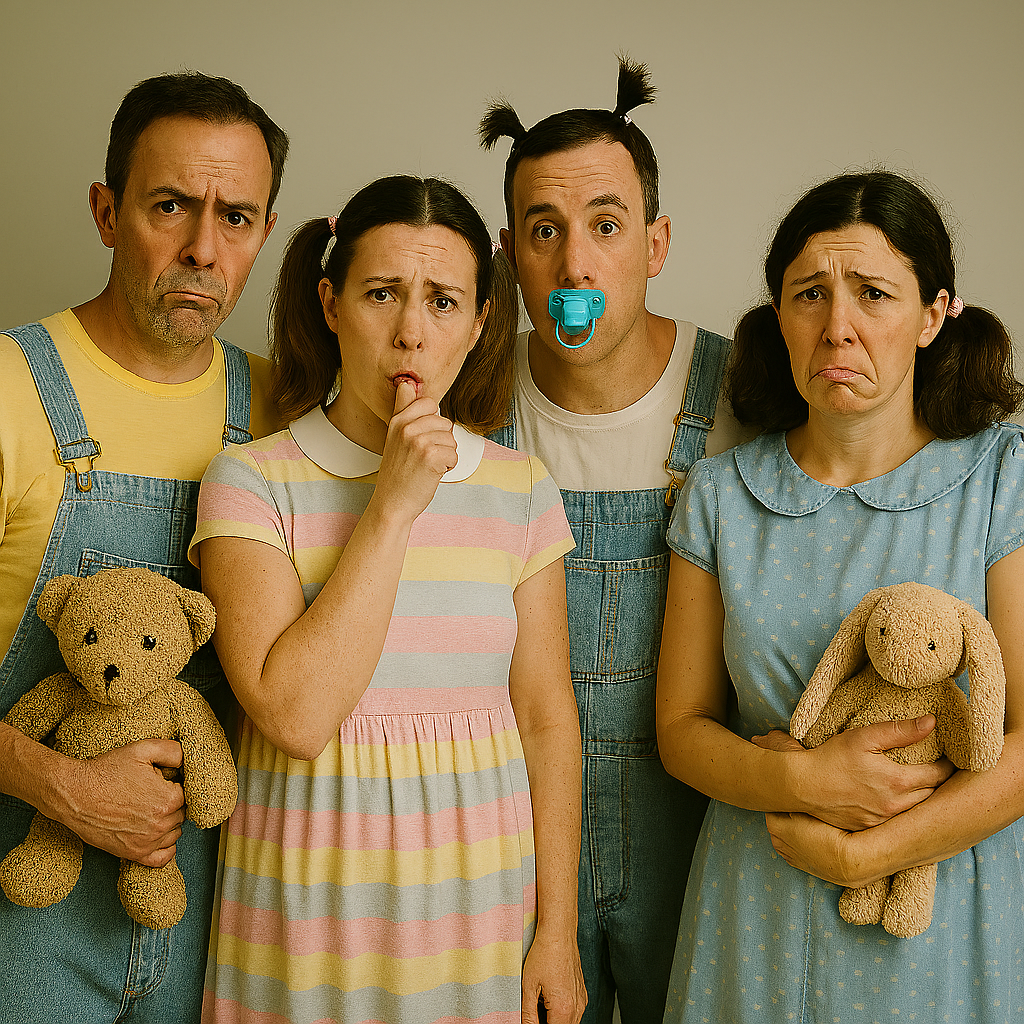
The UK – A Crèche for Adult Children
Britain today cannot feed itself, clothe itself, heat its homes, or power its industry without leaning heavily on other nations. Our borders are insecure, our streets feel unsafe, our economy flatlines while public finances teeter on collapse. Every day we borrow more than we earn. Politicians call this “growth.” In reality, it’s debt dressed up as progress and prosperity.
This didn’t happen overnight. For decades, political leaders have expanded rights, entitlements, and welfare, promising that prosperity could be delivered without sacrifice. They’ve told us we are special, that prosperity could be ours for free. Over time, we believed them. We became hooked on comfort, convinced that success was automatic, that time, effort, and sacrifice were unnecessary. Success was assumed. The link between effort and reward weakened.
From this, a culture emerged in which consumption has been normalised, contribution is optional, and responsibility became increasingly conceptual. The result is a society of adult children — grown bodies with infant minds. Large swathes of our population consume, demand, and vote, but don’t contribute. They expect cars, holidays, laptops, and healthcare as basic entitlements, funded by someone else. Any attempt to remove the “cake and ice‑cream” is met with toddler tantrums: kicking, screaming, and feet stamping.
Education is playing a central role in this shift. Classrooms prioritise wellbeing over rigour, compliance over competition, reassurance over resilience. Children are shielded from consequence and taught that life will always be safe, manageable, and forgiving. Economics, scarcity, and responsibility have faded from the curriculum. The result is a generation unprepared for the realities of competition — both within the country and between nations. They leave the safe haven of school and the state believing the world will treat them kindly, only to discover that life is not free, that simple things they took for granted are expensive, and that other people are competing ruthlessly for advantage.
When they eventually encounter rejection, cost, and pressure, the shock is profound. What should be normal challenges feel catastrophic. What should be expected responsibilities feel unfair. Much of the mental‑health strain we see today is not simply personal fragility; it is the predictable outcome of an education system that trains people for comfort rather than resilience — one that replaces reality with fantasy.
But the problem doesn’t end at school. It extends into the ballot box. Those raised to believe that life is free naturally vote to preserve that illusion. Policies are now shaped not by responsibility but by demands for more comfort, more borrowing, more illusion. When a political system is driven by the promise of effortless prosperity, it inevitably drifts toward unsustainable commitments. Think of it like this, put children in charge of your home and chaos follows. Put adult children in charge of a nation, and collapse follows. This intellectually infantile process is eroding the very structure of our society.
And this system hasn’t grown by accident — it is fed deliberately. Politicians and parties have learned that if they use other people’s income and wealth to fund entitlements, they can keep the population hooked. Welfare, subsidies, and borrowed comforts are not generosity; they are tools of control. To them, feeding and encouraging dependency is more important than economic prosperity, financial prudence, or even protecting democracy. As long as the population remains needy, votes are secured, power is maintained, and the illusion continues. The cycle is simple: take from the productive, give to the non‑productive, call it fairness, and reap the rewards at the ballot box. This is not leadership. It is manipulation. It’s the deliberate development of an adult‑children society — a societal crèche for a population trained to demand more, while those who built this model, the politicians, deliver just enough to stay in power.
And the illusion doesn’t stop at consumption; it extends to reproduction. Adult children are breeding at no cost to themselves, funded by others. Welfare, housing, healthcare, and subsidies cover the expenses, while the productive members of our society foot the bill. This is not family building rooted in responsibility. It is entitlement extended across generations. Children are raised into the same cycle of dependency, taught from birth that wealth is a right, money is free, and debt can be infinite. The result is a growing population trained to demand more while contributing less. The danger is clear: when entitlement is inherited, the burden compounds. A society that rewards breeding without responsibility is not investing in its future — it is multiplying its fragility.
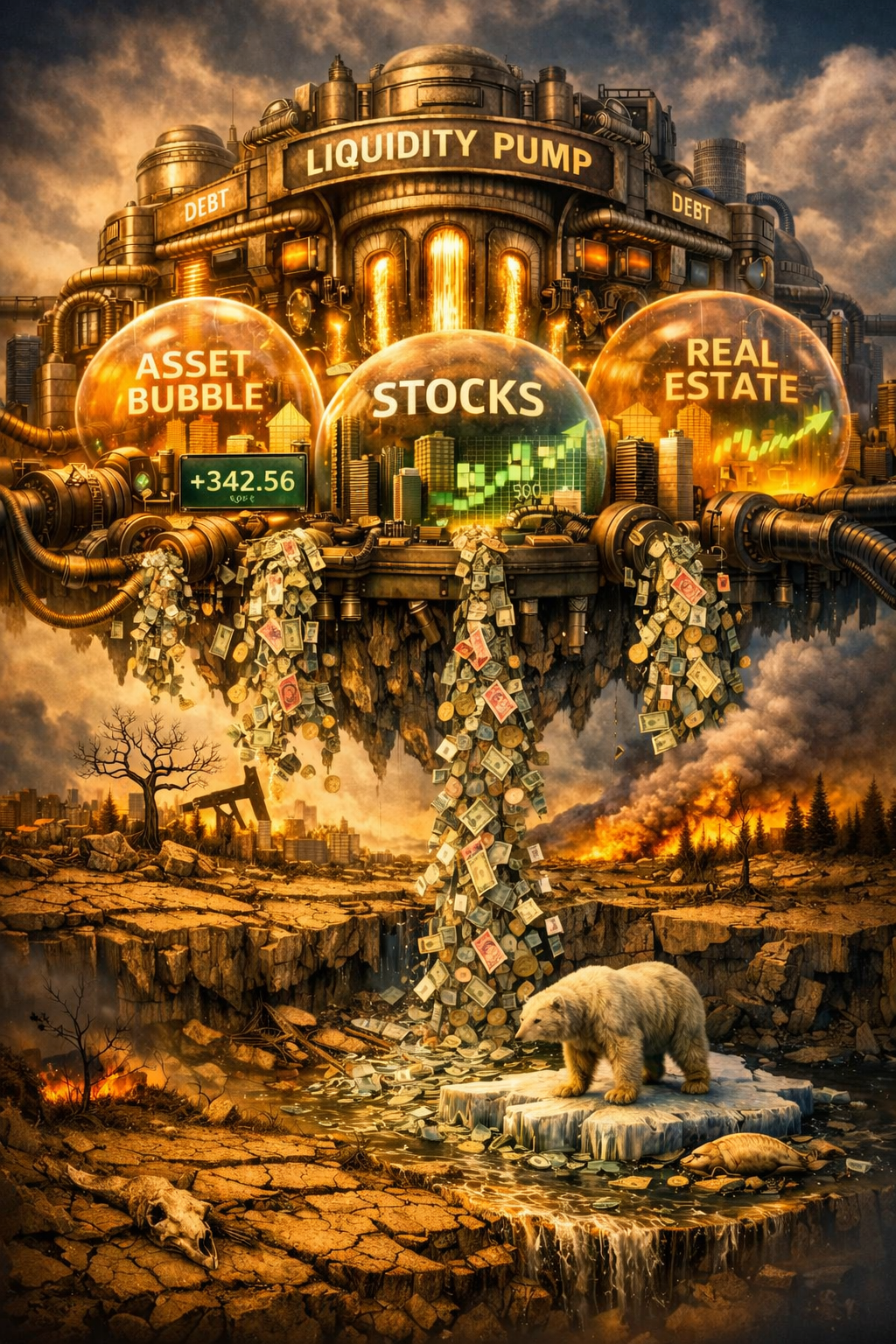
At the heart of this illusion lies a dangerous belief: that money is free, that printing, borrowing, and redistributing are endless and harmless, as though future generations will never have to pay. Wealth itself is seen as a right, and success is expected rather than earned — an illusion where entitlement replaces effort. This mindset is corrosive. It erodes responsibility, blinds society to scarcity, and convinces millions that prosperity is automatic. In truth, it’s nothing more than a fantasy sustained by debt and manipulation.
This is not prosperity; it is fragility disguised as progress. The consequences are visible everywhere. Social contracts weaken as entitlement expands. Our public finances strain under the weight of borrowing disguised as growth. National resilience erodes as the country becomes dependent on others for food, energy, and industry. Mental fragility rises as people encounter a world they were not prepared for. Political discourse becomes dominated by demands for comfort rather than plans for renewal. And the burden on future generations grows heavier with every passing year.
You see, real growth is not debt‑fuelled busy work. It comes from competition — from rewarding productivity and exposing inefficiency. It comes from choice — empowering individuals to act rather than waiting for handouts. It comes from freedom — removing the shackles of dependency and over‑regulation. It comes from responsibility — pairing rights with duties and consequences. It comes from resilience — preparing minds for scarcity, competition, and the reality of finite resources. And it comes from recognising that nations compete, and only those prepared for that competition endure.
This is not a sermon. It is an invitation — to reflect on personal responsibility, on the difference between resilience and illusion, and on the kind of society we are building. The question is not abstract. It is immediate and personal. Each of us must reflect on whether we are living as contributors or as adult children, whether we are resilient or living an illusion funded by others. Do we want to build a society where dependency is rewarded and idleness becomes an entitlement? Or will we choose personal responsibility, competition, and consequence.
Make no mistake: if left unchecked, the continued development of an intellectually infantile population will be the downfall of this nation. The choice is stark — continue feeding the illusion, or return to reality. Adult children cannot build a future; only those who reflect, accept responsibility, and embrace competition can.
See CHOICE GB – Welfare